




MUSCAT, OCT 7
Private 5G networks could help Oman’s oilfields, ports and logistics operators reduce downtime and improve coordination by linking equipment, workers and operational data, with industry executives calling for pilot projects to establish measurable returns before wider deployment.
The technology offers a way to bring functions such as remote monitoring, equipment tracking and live video onto a common communications platform. Its commercial value will depend on how effectively networks address operational needs and perform in Oman’s varied industrial environments.
In an exclusive interview with Observer, Bader al Zidi, Chief Executive Officer of Vodafone Oman, said that adopting systems proven overseas would require local adaptation, drawing on the knowledge of workers and businesses using them.
“Technology has the capability, but we need to understand the end-user needs, and we need to also understand the environment they work in so then we can deliver the value they expect,” he said.
Speaking at the Connected Futures forum in Muscat, Al Zidi and Chief Commercial Officer Dr Ali al Lawati outlined applications across oil and gas, public safety, ports and logistics, shifting the discussion from network coverage towards productivity, safety and operating costs.
Al Lawati said 5G’s combination of capacity, speed, low latency and mobility could support multiple industrial applications on one platform. Operators currently use a mixture of technologies, including Wi-Fi, WiMAX and TETRA, to meet different communications requirements.
In oil and gas, potential applications include connecting rigs and wells, monitoring operations remotely, inspecting facilities with drones and supporting predictive maintenance. Data from equipment could help operators identify developing faults and plan interventions before failures disrupt production.
For ports and logistics businesses, connected machinery and asset tracking could improve visibility over cargo movements and equipment use. Al Lawati also identified digital twins — virtual representations of physical assets or operations — as an application that could become easier to support through 5G connectivity.
Public safety applications include transmitting live video from field teams to command centres, allowing responders to assess conditions and coordinate emergency action. Wireless video surveillance could also serve locations with limited fixed connectivity.
Al Lawati highlighted standalone 5G and edge computing as components of industrial deployments. Processing data closer to equipment and workers can support faster decisions at a site, while dedicated networks can be designed around an operation’s coverage, access and performance requirements.
Al Zidi said matching those capabilities to local conditions would be essential.
“We cannot just copy and paste or bring exact use cases as they are. We need to understand the knowledge of the end users; we need to understand the environment they operate in,” he said.
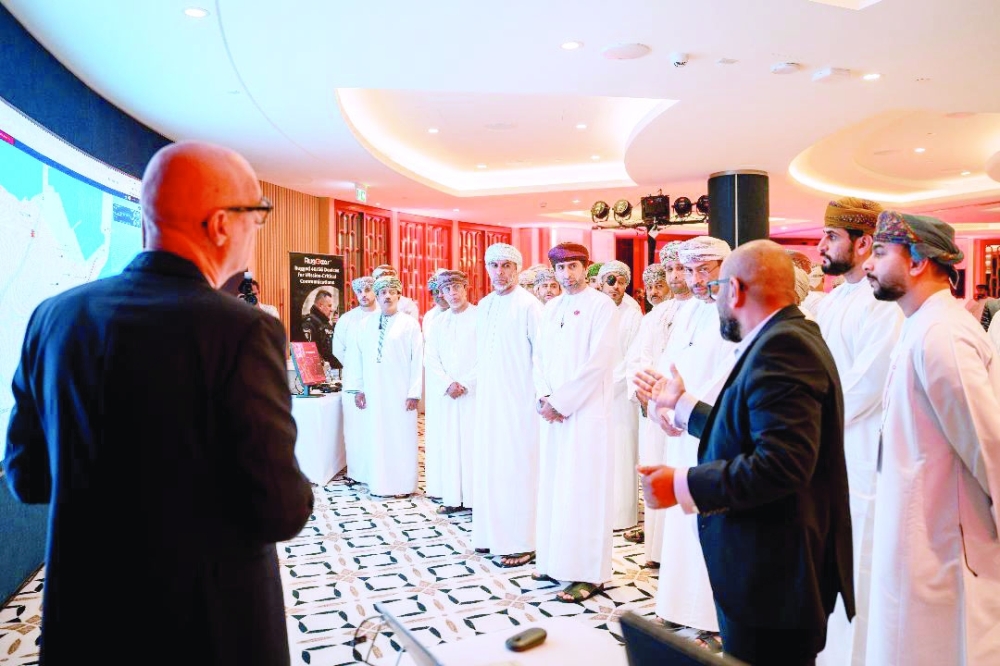
The forum brought together Airbus for mission-critical communications, RugGear for handheld devices and Celona for mobile private networks, alongside industrial representatives and technology demonstrations.
Al Lawati urged businesses to define specific problems and success measures, then test solutions through pilots. The business case, he said, should assess operational efficiency, operating expenditure savings and, where applicable, additional revenue before projects are scaled.
Al Zidi said Vodafone Oman’s next stage of connectivity would focus on helping people make better decisions and run more dependable operations, bringing international experience together with local expertise to address industrial challenges.
Delivery would combine Omani specialists, customers’ operational knowledge and international expertise, he said.
“So, it's a collective effort between our skill-trained Omanis, end-users' expertise, and the global expertise with real use cases that are deployed elsewhere.”
For Vodafone Oman, the approach extends beyond installing networks to designing, building, operating and optimising systems around customers’ needs. Al Lawati said collaboration with businesses could establish practical applications, demonstrate their value through testing and support wider deployment while developing local talent and technical expertise.
Oman Observer is now on the WhatsApp channel. Click here